Fractional ownership divides a single blue-chip artwork into tradable equity shares, allowing multiple investors to hold partial stakes in works by artists such as Jean-Michel Basquiat or Claude Monet. The model draws on precedents such as joint museum ownership and blockchain-based provenance tracking, though academic scrutiny of its long-term implications for stewardship, liquidity, and cultural value remains limited.
For centuries, owning a masterpiece was a privilege reserved for the aristocracy, the church, or, later, the industrial elite. The Kunstmuseum Basel opened its doors in 1661, and the Louvre followed in 1793, yet these were institutions of public viewing, not public ownership. Even America's great museums, including the Metropolitan Museum of Art, began as gifts from private collectors such as railroad executive John Taylor Johnston. Ownership itself remained the preserve of the few.
Fractional ownership disrupts this centuries-old paradigm. By dividing the equity of a single painting into shares, it allows a far broader base of collectors to hold a stake in an artwork once locked away in private vaults or museum storage. This article examines the mechanics, precedents, and unresolved scholarly questions surrounding this model, with particular attention to its implications for provenance, stewardship, and the artwork's cultural status.
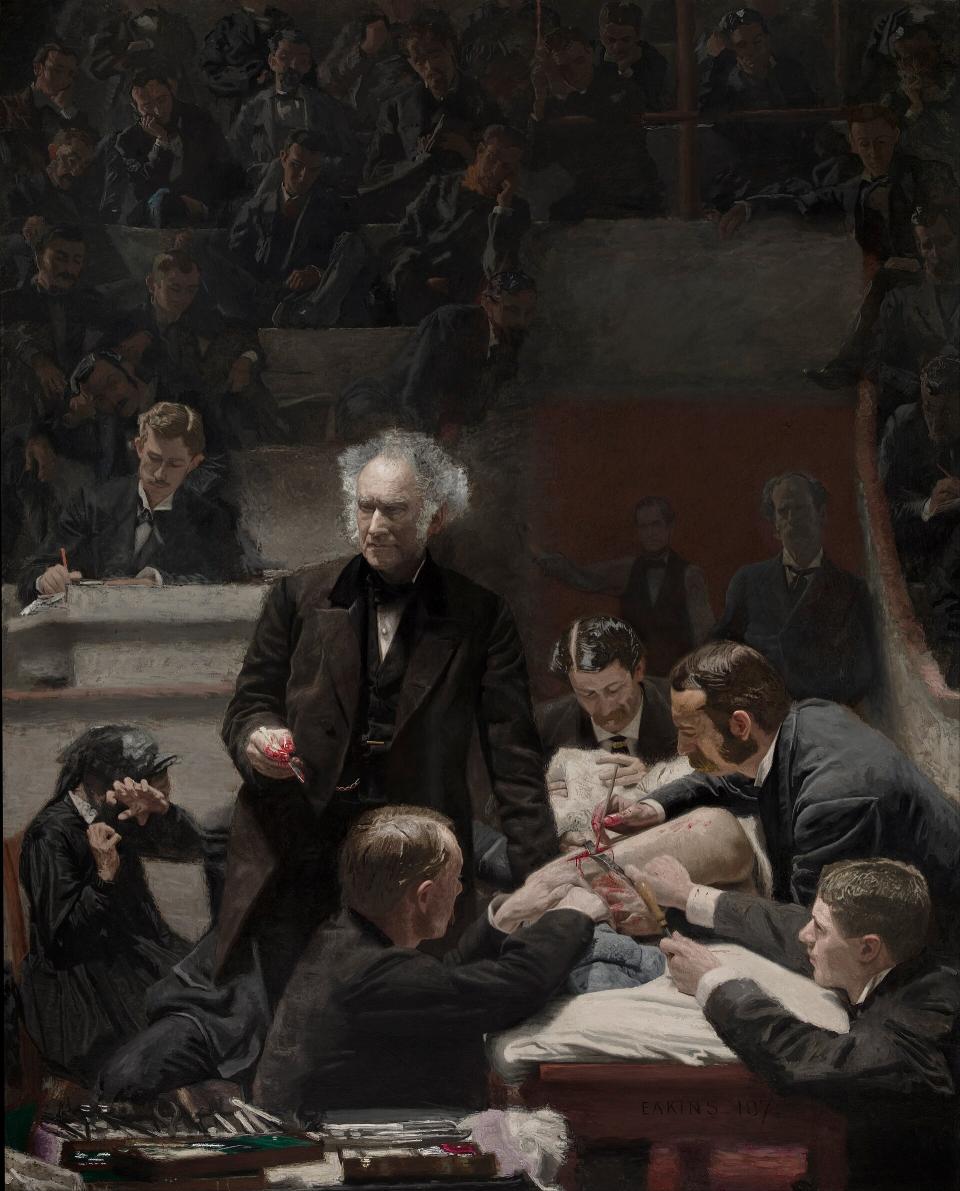
Thomas Eakins' The Gross Clinic (1875)
What is fractional ownership of blue-chip art?
Fractional ownership refers to a structure in which a single artwork's equity is divided among multiple investors, each holding a proportional share rather than physical possession. Unlike traditional co-ownership arrangements, which typically involve a small number of parties with direct legal title, fractional models are often designed to accommodate a large, geographically dispersed pool of shareholders.
This is not without precedent in the traditional art world. In 2007, Christie's brokered a $68 million transaction transferring Thomas Eakins' The Gross Clinic (1875) into joint ownership between the Philadelphia Museum of Art and the Pennsylvania Academy of the Fine Arts. While structurally distinct from today's retail fractional platforms, this deal demonstrates that shared stewardship of a single canonical work is neither a novel nor purely speculative concept; it has institutional antecedents.
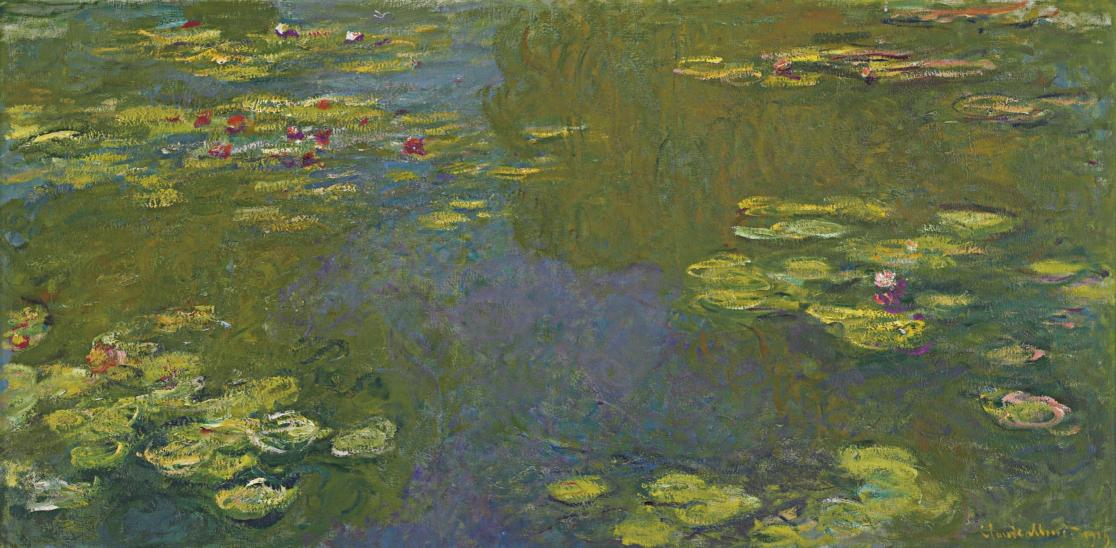
Claude Monet' Le Bassin Aux Nymphéas (1919)
Why has blue-chip art become an asset class worth fractionalising?
The economics of the blue-chip market help explain the appeal. Prices at the top of the market have reached extraordinary heights: Leonardo da Vinci's Salvator Mundi sold for $450.3 million in 2017, the highest price ever recorded for a painting, while Andy Warhol's Shot Sage Blue Marilyn achieved $195 million in May 2022. Claude Monet's Le Bassin aux Nymphéas fetched $80.4 million in 2008, and the 2022 sale of the Paul Allen Collection surpassed $1.5 billion in total, with individual lots by Cézanne, Seurat, and van Gogh each commanding well over $100 million.
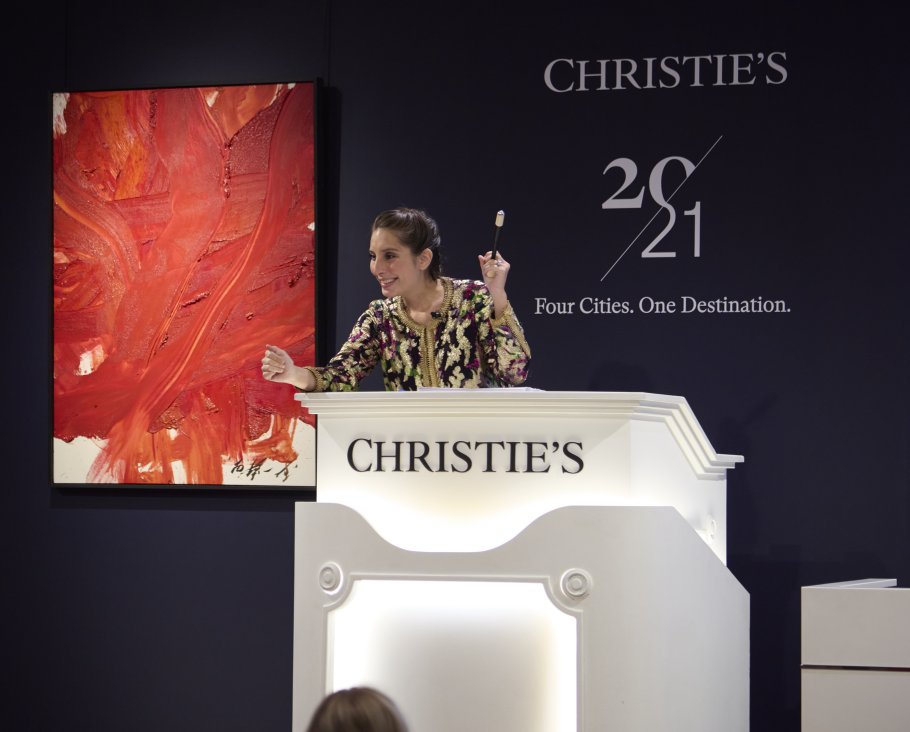
These figures illustrate the scale of capital required to acquire a single work outright, a threshold that excludes all but the wealthiest collectors and institutions. Fractionalisation reframes the transaction: rather than requiring the full hammer price, an investor might acquire a proportional share, with the balance held by co-investors. The buyer's premium structure typical of major auction houses, such as Christie's tiered commission of up to 26% on the hammer price, further underscores how transaction costs at this tier of the market have historically reinforced exclusivity.
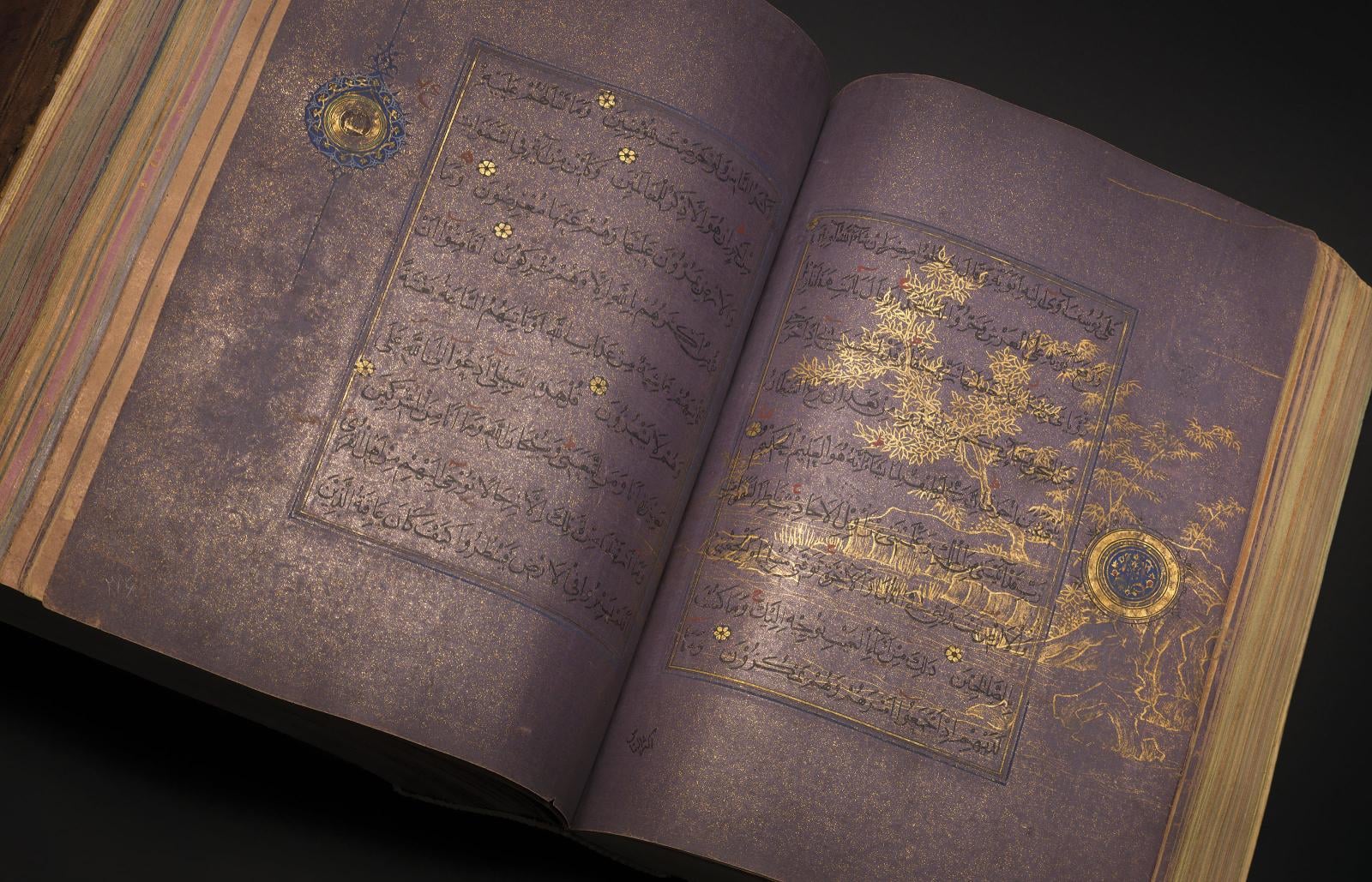
Timurid Qur'an manuscript
How does technology enable fractional ownership of a single artwork?
The scholarly and practical case for fractional ownership has been strengthened by developments in blockchain infrastructure. Since 2018, Christie's has offered "digital passports" recorded on blockchain, providing buyers with a transparent, unerasable record of an artwork's ownership and provenance history. This technology has since expanded into more experimental territory: in October 2024, Christie's auctioned Ascend, a digital work inscribed on Bitcoin's Ordinals protocol, integrating physical and digital ownership records in a single live sale.
Such infrastructure is directly relevant to fractional models, which depend on verifiable, tamper-resistant records to allocate and trade equity shares in a physical asset that cannot itself be divided. Without a reliable ledger of who holds what proportion of a painting, fractional ownership would be vulnerable to the same provenance disputes that have long troubled the traditional market, from the contested history of a Timurid Qur'an manuscript sold for £7 million with no documented provenance before the 1980s, to the restitution of Nazi-looted works such as Adriaen van der Werff's The Penitent Magdalene, which a French court ordered Christie's to return in 2023.
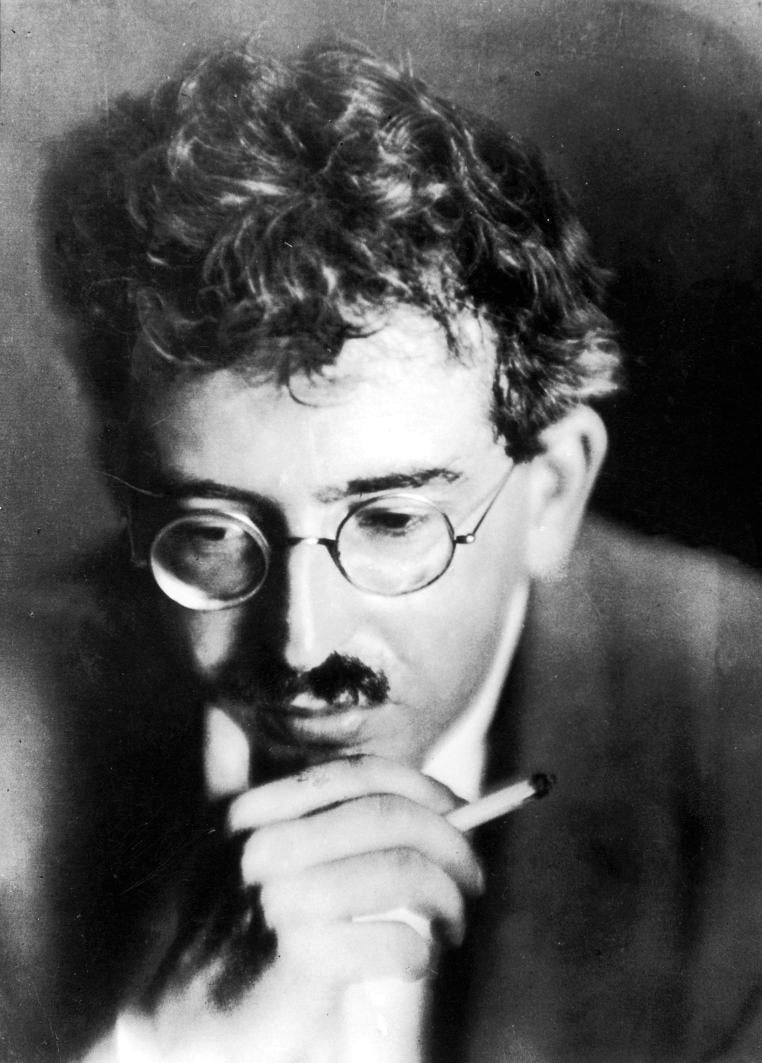
Walter Benjamin
Does dividing ownership change what a masterpiece means?
This is where the discussion moves from finance into aesthetics and philosophy, and where a sophisticated audience will rightly demand more than a market summary.
Walter Benjamin's 1935 essay, The Work of Art in the Age of Mechanical Reproduction, argued that an artwork possesses an "aura", rooted in its singular presence in a specific time and place. Benjamin suggested this aura decays as reproduction distances a work from its original context. Fractional ownership raises a related, if distinct, question: does dividing legal title among dozens or hundreds of shareholders erode the singularity that underpins an artwork's aura, even if the physical object itself remains untouched and undivided?
Arthur Danto's thought experiment on the "artworld" offers a useful counterpoint. Danto proposed that an object's status as art results from the ideas a culture applies to it, rather than its physical properties alone. If this is correct, fractional ownership may leave the arthood of a Basquiat or a Monet entirely intact. Ownership structure is a legal and financial overlay; it does not, in Danto's framework, alter the cultural interpretation that constitutes the work's status as art. Philosopher David Novitz's observation that disputes over art classification are rarely about theory, but about societal values and "where society is trying to go," is instructive here too. The debate over fractional ownership is arguably less about aesthetics than about who deserves a stake in cultural capital, and that is a values question as much as an economic one.
What are the risks and unresolved questions for scholars and collectors?
Several issues remain genuinely open, and an academic audience should treat them as such rather than as settled matters.
Stewardship and conservation
Preservation of blue-chip works requires specialised, climate-controlled conditions, such as those at Christie's Fine Art Storage Services facility in Red Hook, Brooklyn, which maintains a constant 70°F and 50% relative humidity. Fractional ownership structures must clarify who bears responsibility and cost for conservation decisions when equity is dispersed among many stakeholders with potentially divergent interests.
Provenance integrity
The traditional market's recurring provenance scandals, including looted antiquities and Nazi-era restitution cases, demonstrate how fragile ownership records can be even under conventional single-owner or institutional models. Fractional platforms inherit this burden and must demonstrate, transparently, that blockchain-based tracking can withstand the same scrutiny applied to physical title.
Liquidity versus cultural stewardship
A share in a painting is not the painting. Investors seeking liquidity may prioritise resale value, while institutions and cultural custodians prioritise public access and preservation. The Eakins precedent, in which two institutions jointly held The Gross Clinic for shared public benefit, suggests one resolution model, but it remains unclear whether retail fractional platforms, structured around financial return, will replicate that same commitment to stewardship.
Market concentration risk
Christie's reported $8.4 billion in global sales in 2022, driven significantly by major estates and a new generation of younger bidders, and closed 2025 with $6.2 billion in sales as market confidence returned. These figures suggest a market of considerable depth and resilience, but also one historically concentrated among a narrow set of ultra-high-net-worth participants. Whether fractional ownership meaningfully diversifies this base, or simply creates a new layer of intermediaries around the same concentrated pool of trophy assets, is a question that merits rigorous, independent study rather than promotional assertion.
Where does fractional ownership leave the future of the masterpiece?
Fractional ownership does not resolve the tension between art as cultural heritage and art as financial instrument; it simply renders that tension more visible, and more widely shared. For scholars, the model offers a rich case study in how technology, law, and aesthetics intersect when a singular object is divided into transferable financial interests. For collectors, it offers a genuine, if still maturing, route into an asset class long defined by its exclusivity.
What seems clear is that the questions raised by fractional ownership are not new. They echo the debates that have accompanied every prior expansion of art access, from the opening of the Louvre to the rise of the museum as a philanthropic gift to the public. What has changed is the mechanism: blockchain-verified equity has replaced the museum wall as the vehicle of democratisation. Whether this mechanism proves as durable, and as trusted, as the institutions it seeks to supplement remains an open and worthwhile line of enquiry.
Collectors and researchers seeking to engage further with the intersection of art history, provenance, and market structure are encouraged to explore expert-curated resources and advisory services that address these questions with the rigour they deserve.
Frequently asked questions
What does it mean to fractionally own a piece of art?
Fractional ownership means holding a proportional equity stake in a single artwork rather than owning it outright. The physical piece is typically held in secure storage, while shareholders hold a financial interest recorded through legal or blockchain-based documentation.
Is fractional ownership the same as buying a print or reproduction?
No. A fractional owner holds a legal or financial claim to a share of the original, physical artwork itself, not a copy or edition. This differs from purchasing prints, which are separate reproductions with no claim to the original object.
What historical precedent exists for shared ownership of a single masterpiece?
The 2007 joint acquisition of Thomas Eakins' The Gross Clinic by the Philadelphia Museum of Art and the Pennsylvania Academy of the Fine Arts, structured for $68 million, demonstrates that shared stewardship of a single canonical work predates modern fractional platforms.
What are the main risks associated with fractional art ownership?
Key risks include unresolved questions around conservation responsibility, the integrity of provenance records, liquidity mismatches between investors and cultural custodians, and the possibility that fractionalisation simply adds intermediaries around an already concentrated market rather than genuinely broadening access.
Who should consider fractional ownership of blue-chip art?
Fractional ownership may suit collectors and investors seeking exposure to the appreciation potential of top-tier art, such as works by Basquiat or Monet, without committing the full capital required for outright acquisition. Those prioritising direct stewardship, physical possession, or unilateral conservation decisions may find traditional single ownership better aligned with their goals.