Stephen Linsteadt’s artistic evolution is a story of personal transformation, emotional depth, and an unwavering connection to the subconscious. It is a narrative painted with moments of self-discovery, layered with influences from his early childhood and shaped by some of the 20th century’s most iconic artists. At the heart of his work lies a dialogue with the unknown, a dialogue that bridges his inner world with the canvas.
From Struggle to Determination: The Origin of an Artistic Spirit
Linsteadt’s passion for art began with an unlikely moment of humiliation in the second grade. After a disruptive episode in class, his teacher’s public criticism of his artistic abilities became a catalyst for his lifelong dedication to painting. "Don’t you wish you could paint as well as these first graders?” she had sneered. What might have demoralized others instead sparked a deep determination within Linsteadt. He became committed to proving her wrong, nurturing what would grow into an extraordinary talent.

His father, an artist himself, played a pivotal role during these formative years. Through lessons on perspective and proportions, they established a bond rooted in shared creativity. “Some of my happiest memories are of mixing oil paints with him or learning the intricacies of shadow and depth,” Linsteadt reflects. These moments not only provided him with technical skills but also instilled the emotional connection to his craft that continues to guide him today.
By the time Linsteadt reached junior high and high school, his dedication bore fruit. He began receiving widespread recognition for his work, earning blue ribbons for his drawings and paintings at local county fairs. This validation helped solidify his decision to seriously pursue art, leading him to continue his studies in college.
Discovering the Abstract and a Language of the Subconscious
Linsteadt’s artistic identity took a definitive turn during his early college years at Grossmont College, where he studied under Marjorie Hyde, chairperson of the art department. Hyde introduced him to abstract expressionism, opening the young artist to the freedom of starting a composition without rules or preconceived notions. "Artists like Robert Motherwell, Jackson Pollock, Franz Kline, and De Kooning revealed a completely different world to me," Linsteadt explains. "What drew me in was their ability to express raw emotions without verbal communication."

This immersion in abstract techniques encouraged Linsteadt to explore his subconscious as a source of inspiration. Hyde’s teachings emphasized the value of automatic painting, where gestures emerge as unguarded responses to an inner emotional terrain. For Linsteadt, this approach was not merely a technique; it became a philosophy. His paintings began to feel less like deliberate creations and more like conversations between his conscious mind and hidden layers of self-awareness.
Today, that dialogue remains a critical aspect of his process. "Some mornings I’ll start a painting with a single spontaneous gesture,” he describes. “Each brushstroke informs the next until the canvas surprises me. It feels like discovering something I didn’t know existed."
Influences in Form, Mythology, and Alchemy
While Linsteadt’s process may often seem unrestrained, his work is grounded in a thoughtful structure. The influence of Richard Diebenkorn, particularly his focus on form and composition, echoes throughout Linsteadt’s body of work. "I need structure and balance to make sense of my paintings," he explains, citing Diebenkorn’s ability to create meaning while maintaining expressive freedom.
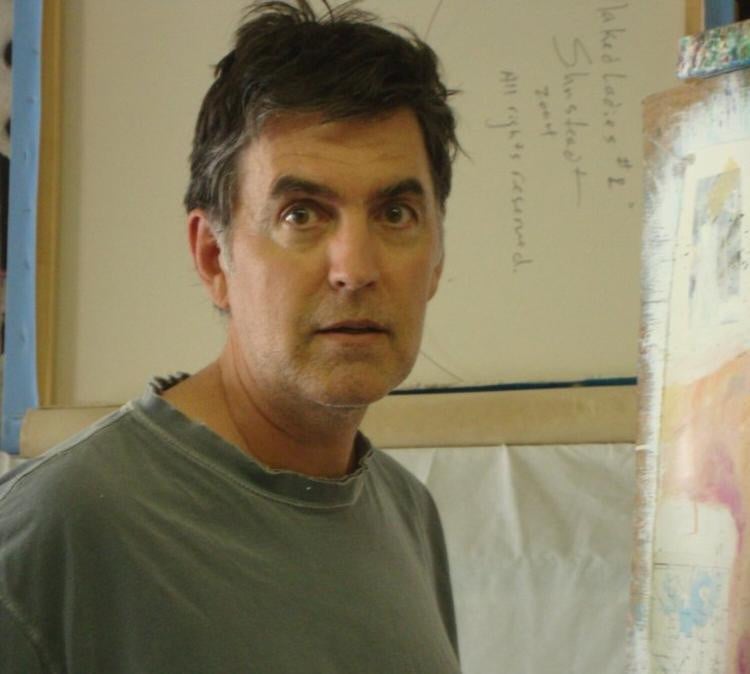
Another major influence lies in the alchemical writings of Carl Jung. Jung’s exploration of transformation, symbolism, and the subconscious provided Linsteadt with a conceptual framework that continues to shape the themes in his art. Symbols and motifs often emerge unplanned, layering his work with meaning. "Alchemy, to me, is about the transformation of the self," Linsteadt explains. "It’s an invitation to shift challenging energies into something meaningful and healing.”
This ideology extends to his aesthetic inspirations as well, such as the emotional pull of Duchamp’s ready-mades, Joseph Beuys’ environmental awareness, and the rich imagery drawn from ancient mythologies. For Linsteadt, these elements contribute to paintings that feel both timeless and deeply personal.
The Emotional Resonance of “No Fly Zone”
Linsteadt’s ability to craft visual narratives that resonate emotionally came to the forefront during the war in Ukraine. His painting “No Fly Zone,” inspired by aerial views of Mariupol, is a haunting intersection of humanitarian crisis and artistic expression. Using collage, spray paint, charcoal, and unprimed canvas, Linsteadt portrayed the destruction of war with visceral rawness.
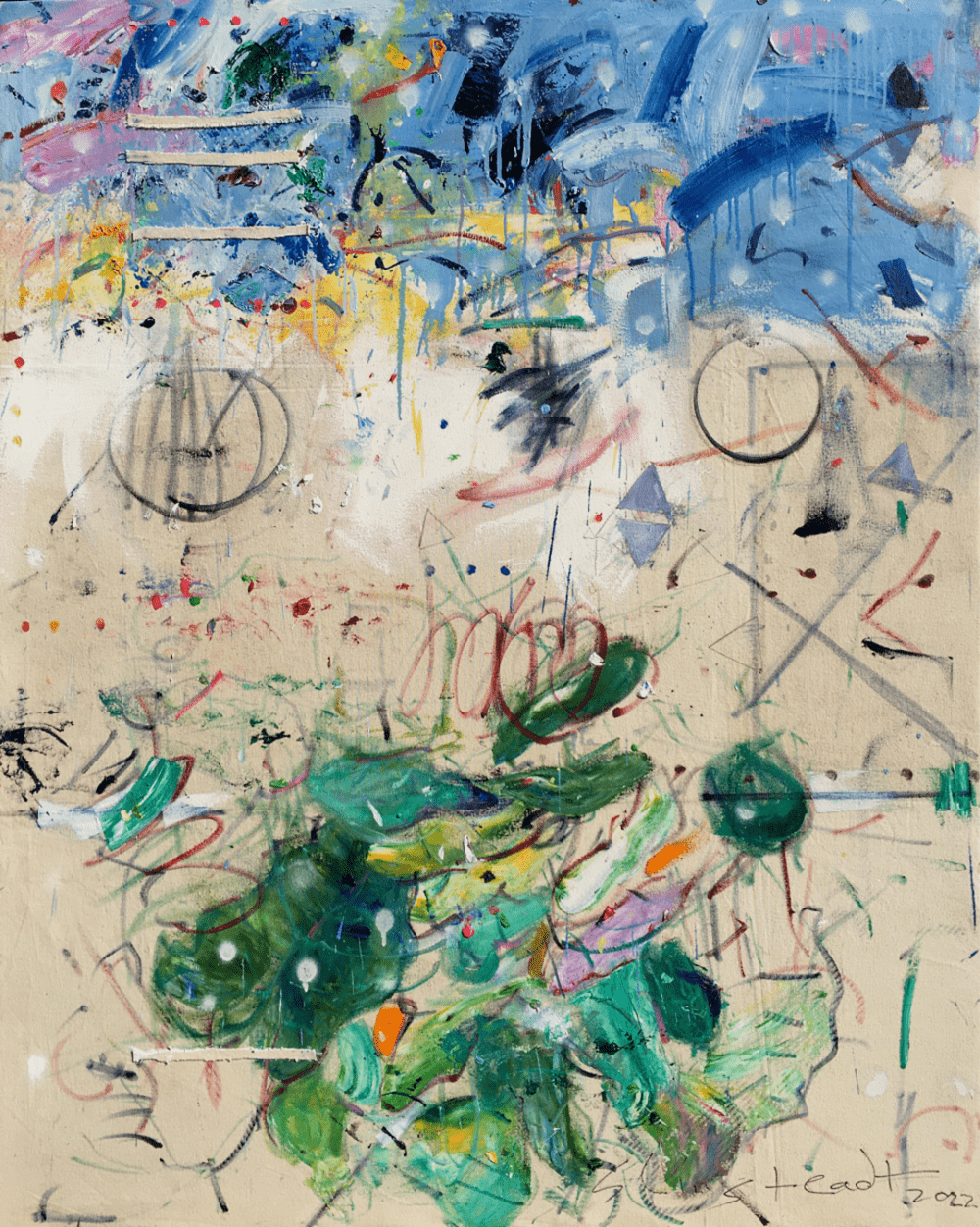
“The aerial bombardments made me think about the fragility of what we often take for granted,” he shares. Despite its sobering tone, the work features alchemical symbols scattered among the chaos, reminding viewers of humanity’s ability to find resilience even amidst despair.
Mourning Through Art
Early 2024 brought a deeply personal loss for Linsteadt with the passing of his father. This event marked a significant chapter in his creative process. "Art was something we deeply shared," he reflects. While some might interpret this as a period of creative stagnation, Linsteadt describes it as "a time of waiting and listening."

He likens the experience to a bridge between mourning and discovery, allowing his subconscious to work in ways his conscious mind cannot yet articulate. "I’m not sure what will emerge from this, but I’m open to the potential that lies just below the surface."
The Birth of “Blue Morpho”
Among Linsteadt’s favorite works is “Blue Morpho,” a painting born from a quiet moment of domestic life. After taking a photo of his wife and their cat napping on the couch, Linsteadt’s wife suggested it could inspire a painting. “If you’re ever looking for inspiration, there it is,” she had said.

The composition immediately evoked memories of Gustav Klimt’s “Woman with Fan,” particularly its vibrant yet intimate spirit. Without a specific plan, Linsteadt embraced spontaneity, letting subconscious images and alchemical symbols guide his choices. Birds native to Brazil, where Linsteadt currently resides, emerged throughout the piece, weaving both geographical and emotional roots into the narrative.

Blue Morpho (2021)
“There’s something wonderfully invasive yet mesmerizing about interpreting someone else’s dreams,” Linsteadt muses. The result is a highly evocative composition that invites viewers into their own internal landscapes of memory, imagination, and transformation.
Closing Thoughts
Stephen Linsteadt’s work is more than just a reflection of external reality; it is a mirror of his internal journeys. It explores the tension between spontaneity and structure, drawing deeply on personal transformation to create art that connects on universal levels.

For art enthusiasts, aspiring artists, or collectors, Linsteadt’s emphasis on symbolism, subconscious dialogue, and emotional resonance offers not only inspiration but a reminder of art’s unique ability to reflect the complexities of human experience.
Interested in exploring deeper insights and artworks by Stephen Linsteadt? Visit his artist profile on ArtRewards and discover pieces that awaken reflection and imagination.